 QuietFlame
Why Do I Wake Up at 3am and Can't Fall Back Asleep?
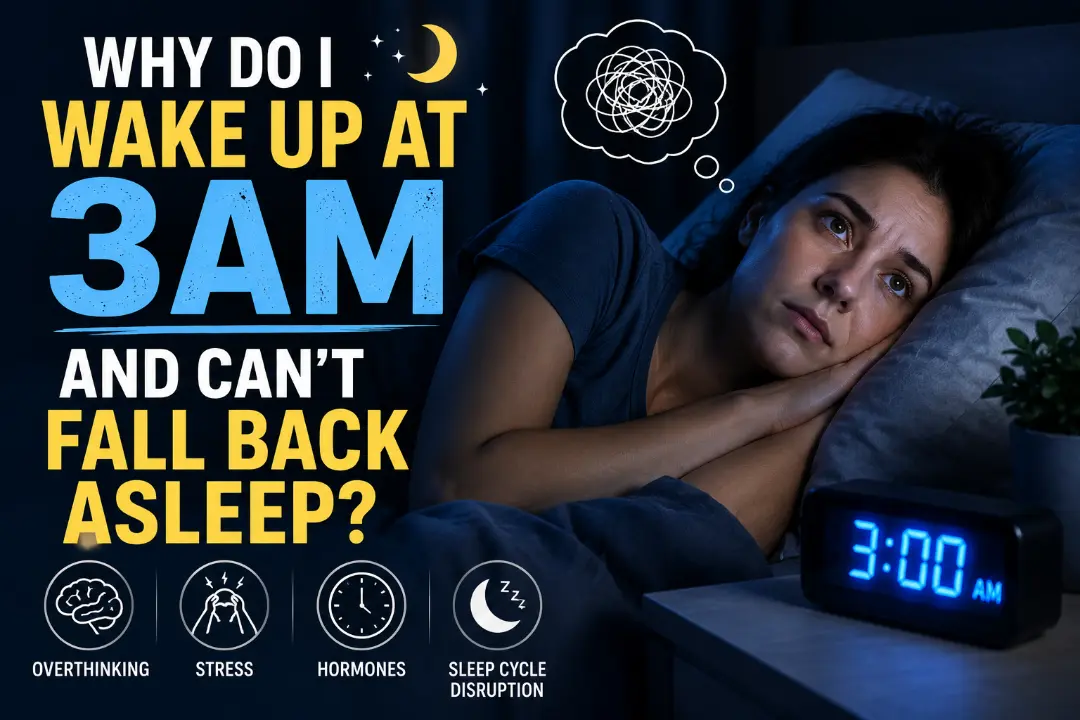
Waking at 3am isn't random and it isn't insomnia in the way most people think. Here is what is actually happening in your body at that hour, and the specific steps that help you fall back asleep instead of lying there watching the clock.
It is almost always the same time. Not 1am, not 5am - somewhere in that narrow window around 3am, give or take thirty minutes. Your eyes open. The room is quiet. And within a few seconds, your mind is already awake enough that going back to sleep suddenly feels like a much harder problem than it was an hour ago.
This is one of the most common sleep complaints there is, and one of the most misunderstood. Most people assume it means something is wrong with them specifically - too much stress, a broken sleep system, the start of "real" insomnia. In most cases, none of that is true. There is a specific, well-documented set of reasons this happens at this particular time of night, and a specific set of responses that make it shorter and less frequent.
This article walks through why 3am waking happens, why it is so much harder to fall back asleep than it was to fall asleep the first time, and exactly what to do about it - both in the moment and as a longer-term fix.
Why 3am specifically, and not some other time
Sleep is not one uniform state that holds steady for eight hours. It moves in cycles of roughly ninety minutes, alternating between lighter stages, deep slow-wave sleep, and REM sleep. Early in the night, your body spends more time in deep sleep. As the night progresses, each cycle shifts toward more REM and lighter stages, and deep sleep becomes harder to sustain.
For most people who fall asleep between 10pm and midnight, this shift means that the third or fourth sleep cycle - the one that lands somewhere around 2:30 to 4am - is naturally lighter and more fragile than the cycles earlier in the night. You are not waking up because something went wrong. You are waking up at the exact point in the night where waking is structurally more likely, because your sleep architecture is doing what it normally does as the night matures.
There is also a hormonal component. Cortisol, the hormone most associated with alertness and stress response, is not flat overnight - it follows its own rhythm, and it begins rising several hours before your natural wake time as part of a process sometimes called the cortisol awakening response. For many people, this rise starts in the early hours of the morning, well before the alarm goes off. A small, normal increase in cortisol at 3am can be enough to nudge a brain that is already in a lighter sleep stage the rest of the way into wakefulness.
Blood sugar plays a role as well. If dinner was early, light, or counterbalanced by alcohol - which causes a rebound drop in blood glucose several hours after consumption - a modest dip in blood sugar in the early hours can trigger a stress hormone response that is enough to wake you. This is one of the more underappreciated contributors to the specific 3am pattern, and one of the easiest to test for yourself.
None of these factors are dramatic on their own. The reason 3am waking feels so disruptive is that several ordinary, mild nighttime processes - lighter sleep architecture, a rising cortisol curve, a possible blood sugar dip - are converging at roughly the same point in the night.
Why falling back asleep is harder than falling asleep the first time
This is the part that confuses most people, and it has a clear explanation. Falling asleep the first time, at the start of the night, happens after a long day of accumulated sleep pressure - the buildup of adenosine in the brain across your waking hours that makes you progressively sleepier the longer you have been awake. If that first transition is already slow for you, see how to fall asleep faster without melatonin. By the time you get into bed, that pressure is at its highest point of the day, and it does a lot of the work of pulling you into sleep.
At 3am, that sleep pressure has already been partially discharged. You have been asleep for several hours, which means the chemical drive that made falling asleep easy at 10pm has been reduced. You are waking into a body that is less primed to immediately fall back asleep, at exactly the moment your cortisol is beginning its gentle rise. The conditions that made sleep onset easy the first time are simply not present in the same way the second time.
This is compounded by a behavioral factor that has nothing to do with physiology: the moment you check the time or start evaluating how long you have been awake, you introduce cognitive activity that the brain does not produce during normal sleep. Looking at a clock, doing math about how many hours of sleep remain, or beginning to worry about how the next day will go are all forms of active, alert thinking - and active, alert thinking is the opposite of what sleep onset requires. A lot of what makes 3am waking feel like "insomnia" is actually this secondary layer, stacked on top of an originally brief and unremarkable awakening.
The role of a racing mind at this specific hour
There is something about waking at 3am that seems to invite a particular kind of thinking - not gentle, drifting thoughts, but sharper, more anxious, more catastrophizing ones. This is not a coincidence, and it is not a sign that the thoughts are more important or more accurate than they would be at noon.
Cognitive research on nighttime rumination points to a few converging reasons. Cortisol, which is rising at this hour, is associated with heightened vigilance and threat-monitoring - useful for waking you up in the morning, less useful for calm reflection in the middle of the night. At the same time, the prefrontal cortex, the part of the brain most responsible for context, perspective, and rational evaluation, is less active during the transition out of sleep than it is during full daytime wakefulness. The result is a mind that is alert enough to generate concerns but under-resourced to evaluate them accurately.
This combination is why a stray thought about a work deadline can feel genuinely alarming at 3am in a way it would not during a normal Tuesday afternoon. The feeling of urgency is real, but it is being generated by a brain in an unusual state, not by new information about how serious the situation actually is. Recognizing this in the moment - even just naming it internally as "this is 3am thinking, not daytime thinking" - is itself one of the more effective tools for reducing how gripping these thoughts feel.
What not to do when you wake up
Before getting to what helps, it is worth being specific about the responses that reliably make this worse, because they are also the most instinctive ones.
Checking the time. This feels informative, but it almost never changes what you do next, and it reliably increases alertness and anxiety about the hours remaining. The information is rarely worth the cost.
Reaching for your phone. Beyond the blue light suppressing whatever melatonin is still circulating, a phone offers an almost unlimited supply of stimulating content at the exact moment your brain needs the opposite. Even a quick check of the time on a phone risks turning into five minutes of scrolling.
Lying in bed trying to force sleep through sheer effort. Sleep does not respond to effort, and trying harder to fall asleep is one of the most well-documented ways to make it less likely. The harder you try, the more alert and frustrated you become, which moves you further from the parasympathetic state sleep requires.
Starting to problem-solve. The instinct to use a quiet, distraction-free 3am as an opportunity to "figure things out" feels productive, but it is one of the most reliable ways to turn a brief awakening into an hour of wakefulness. Problem-solving is alert, effortful cognitive work - precisely what needs to not be happening for sleep to return.
What actually helps: the in-the-moment approach
The single most useful shift is to treat the first few minutes after waking as a small window where the right response can prevent a brief awakening from becoming a long one.
Stay in bed, in the dark, and do not check the time. This sounds almost too simple to matter, but it removes the two most common accelerants - light exposure and time-anxiety - before they have a chance to take hold.
Begin slow breathing immediately. The same mechanism that helps at the start of the night works here: a slow inhale through the nose for about four seconds, followed by a longer exhale of six to eight seconds, repeated for several minutes. This directly engages the parasympathetic nervous system through the vagus nerve, lowering heart rate and reducing the physiological alertness that is keeping you awake. It does not require getting up, turning on a light, or doing anything other than breathing slightly differently than you would by default.
If a specific thought is looping, externalize it rather than solving it. If your mind keeps returning to the same concern, a brief mental note - "I will think about this tomorrow" - or, if you are someone who keeps a notepad by the bed, writing a single short phrase about it in the dark can be enough to relieve the pressure to keep mentally rehearsing it. The goal is not resolution. It is registration. The brain often stops pushing a thought forward once it has been acknowledged in some concrete way.
If fifteen to twenty minutes pass and you are still clearly awake, get up. This is one of the more counterintuitive pieces of advice from sleep research, but it has strong support: lying in bed while wide awake teaches your brain to associate the bed with wakefulness rather than sleep. If you are still alert after a reasonable window, get up, go to another room, keep the lights dim, and do something quiet and unstimulating - reading something low-key, for instance - until you feel sleepy again, then return to bed. This protects the bed-sleep association that makes falling asleep easy in the first place.
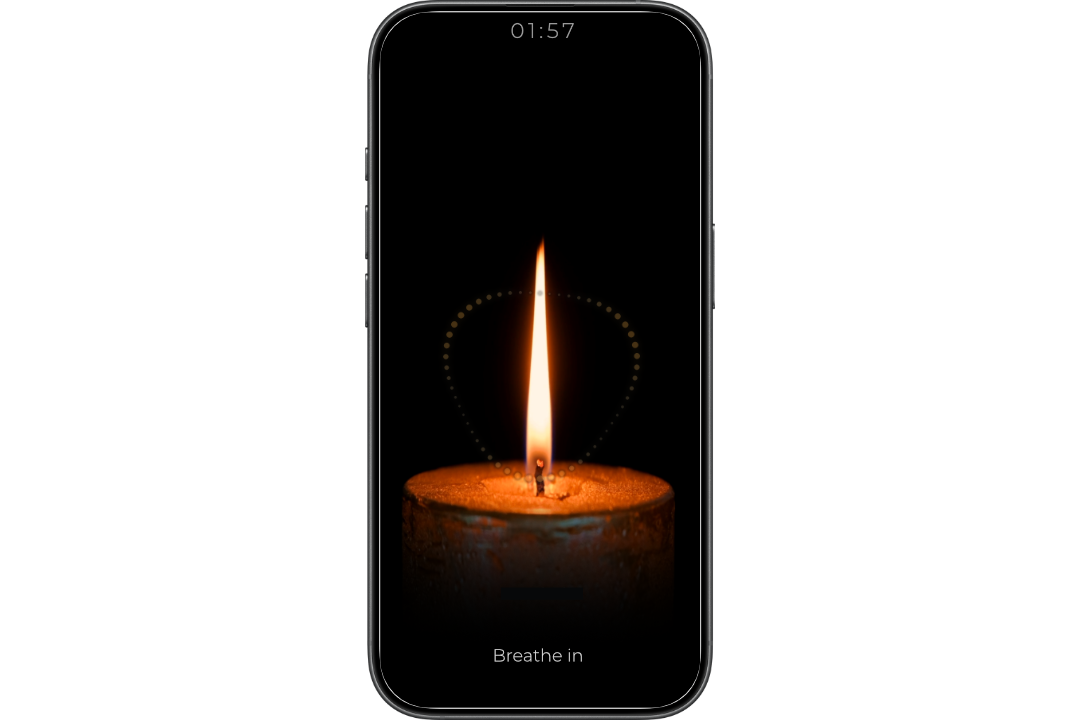
In the moment, counting your own breath can be one more small task for a mind that is already working harder than it should be at 3am. QuietFlame gives you a dim, animated flame that rises and settles at a slow 4-6 pace, so you can simply follow it with your eyes in the dark rather than tracking a count yourself. There is nothing to remember and nothing to get right - just something quiet to rest your attention on while your body does the rest of the work.
What helps over time: addressing the underlying causes
The in-the-moment approach reduces how long a 3am waking lasts. Addressing the underlying contributors reduces how often it happens in the first place.
Look at your evening alcohol intake. Alcohol can make falling asleep feel easier initially, but it disrupts sleep architecture later in the night and is one of the most common, most overlooked causes of consistent middle-of-the-night waking. The metabolization of alcohol several hours after drinking is associated with both a rebound in alertness and a drop in blood sugar - two of the exact mechanisms discussed earlier in this article. If 3am waking is frequent and you drink in the evening, this is one of the highest-yield things to experiment with first.
Check whether dinner was light or early enough to cause a blood sugar dip overnight. A small, slow-digesting snack before bed - something with a bit of protein or fat rather than pure sugar - can help stabilize blood sugar through the night for people whose waking correlates with an early or light dinner. This is not relevant for everyone, but it is worth testing if the pattern is consistent.
Limit light exposure if you do get up. If getting up becomes a regular part of your middle-of-the-night routine, keep the lighting as dim as possible - a small lamp rather than an overhead light, and ideally nothing brighter than what you would use to read comfortably. Bright light at 3am can shift your circadian signal enough to make the rest of the night's sleep harder to recover.
Build a consistent wind-down routine in the first place. A lot of what determines how easily you fall back asleep at 3am is actually set up hours earlier, at your original bedtime. A consistent pre-sleep sequence - dim lighting, a cool room, a brief breathing practice - strengthens the overall association between your evening routine and sleep onset, which carries some benefit into the middle of the night as well, even though the mechanisms are not identical.
Pay attention to whether the waking happens on a predictable schedule relative to your bedtime. If you consistently wake roughly four and a half to six hours after falling asleep, this is consistent with the natural cycle-boundary explanation described earlier, and is less likely to indicate a problem requiring intervention beyond the steps above.
When 3am waking is something more than this
Everything described so far covers the common version of this experience - an occasional or even semi-regular awakening that responds to behavioral adjustments and does not represent an underlying disorder. But there are a few patterns worth taking seriously enough to bring to a doctor.
If you wake gasping, choking, or with a sensation of not being able to breathe, this can be a sign of a breathing-related sleep issue such as sleep apnea, and is worth discussing with a doctor regardless of how the rest of your sleep feels.
If the waking is consistently accompanied by a racing heart, sweating, or a strong sense of dread that does not track to anything you can identify, and this happens repeatedly, it is worth mentioning to a doctor or therapist, since anxiety and certain medical conditions can present specifically as nighttime symptoms.
If you are waking at 3am most nights for several weeks or more, going back to sleep is consistently difficult regardless of what you try, and this is affecting how you function during the day, this pattern is worth discussing with a doctor or a sleep specialist rather than continuing to self-manage indefinitely. Cognitive behavioral therapy for insomnia (CBT-I) is the evidence-based first-line treatment for chronic middle-of-the-night waking and early-morning insomnia, and it works directly on the behavioral and cognitive patterns that sustain the problem rather than masking it. Many of the steps in this article overlap with what a CBT-I protocol would include, but a structured, guided version tends to be more effective for persistent cases.
Putting it together
Waking at 3am is not, by itself, a sign that something is wrong. It is the predictable result of where you are in your sleep cycle, a normally rising cortisol curve, and sometimes a dip in blood sugar - three ordinary nighttime processes that happen to converge at roughly the same hour for a lot of people. What turns a brief, unremarkable awakening into forty-five minutes of frustration is usually not the waking itself, but what happens in the first few minutes afterward: checking the time, reaching for a phone, or starting to problem-solve.
Tonight, if it happens again: stay in the dark, skip the clock, and start slow breathing immediately - four seconds in, six to eight seconds out. If a thought keeps circling, give it a brief acknowledgment rather than trying to resolve it. And if fifteen or twenty minutes pass without your body settling, get up rather than lying there fighting it.
Most 3am waking is not a sign that your sleep is broken. It is a sign that your sleep is doing something completely normal at a moment that happens to feel disorienting in the dark. Treat it as a brief pause rather than a crisis, and more often than not, it will resolve itself faster than it feels like it will.
FAQ
Why do I wake up at 3am?
It is often linked to a natural sleep cycle transition, blood sugar shifts, stress hormones, or light and temperature changes rather than random insomnia.
Is waking at 3am a sign of insomnia?
Not necessarily. Occasional middle-of-the-night waking is common. It becomes a problem when you cannot return to sleep and it happens frequently enough to affect your days.
What should I do when I wake up at 3am?
Avoid checking the clock, keep lights dim, and use slow breathing with a longer exhale instead of reaching for your phone or starting mental problem-solving.
Can breathing help me fall back asleep?
Yes. Slow breathing lowers arousal and gives your mind a simple rhythm to follow, which often helps you drift back within ten to twenty minutes.