 QuietFlame
10 Best Breathing Apps in 2026 (Ranked and Reviewed)
We tested the most popular breathing apps so you do not have to. Here is an honest look at the 10 best breathing apps in 2026 - and why QuietFlame comes out on top for people who actually want to build the habit.
Breathing apps have gone from a niche curiosity to a crowded market. Search the App Store today and you will find dozens of options promising stress relief, better sleep, and a calmer mind. Most of them deliver something useful. But useful is not the same as the right fit for you — especially if your main goal is a short paced breathing for sleep habit you will actually keep.
This list covers the 10 best breathing apps in 2026 - what each one does well, where it falls short, and who it suits best. We saved the top spot for last, and we will be honest about why.
If you are already a breathing app user looking to switch, or someone who has never tried one and wants to start on the right foot, this guide cuts through the noise.
What actually matters in a breathing app
Before the rankings, a quick note on how to evaluate these tools. The features that look impressive in screenshots are not always the features that keep you breathing consistently six weeks in.
The things that actually matter:
- Friction. How many taps to start a session? If the answer is more than two, you will skip it on hard nights.
- Visual pacing. A countdown clock is cognitively heavy. A visual guide - something that moves with your breath - keeps attention without effort.
- Session length. Five minutes is the sweet spot for everyday use. Apps built around thirty-minute sessions get skipped.
- One job or many? A meditation library bundled with breathing exercises sounds like more value. In practice, it often means breathing gets buried under content you did not open the app for.
Keep those in mind as you read.
10. Breathwrk
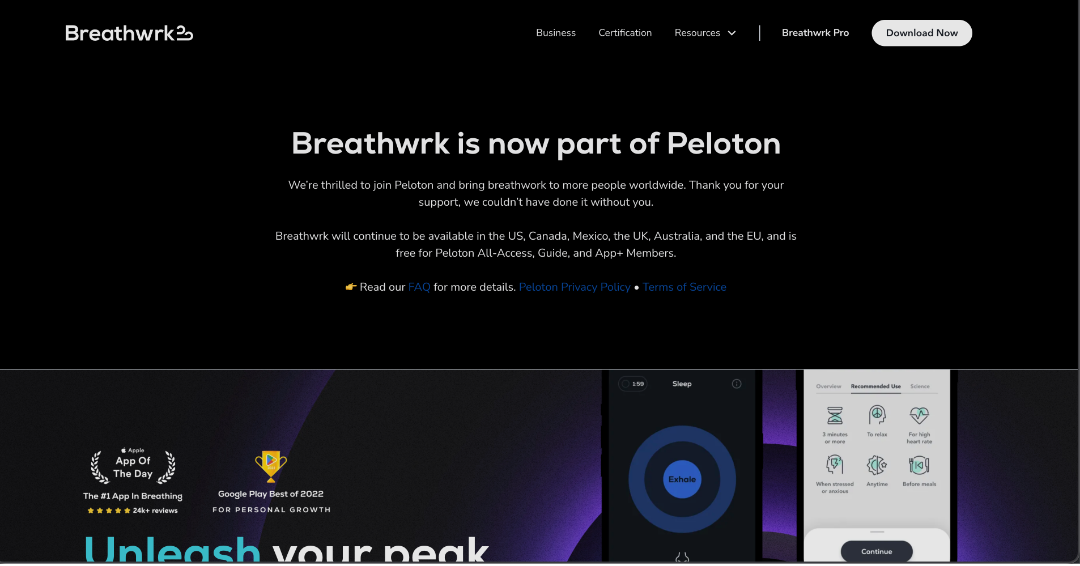
Best for: people who want structure and variety in one dedicated app
Breathwrk has built a reputation as one of the more serious breathwork-only platforms. It offers a library of techniques - box breathing, 4-7-8, Wim Hof-style patterns, coherence breathing - with guided audio and clear on-screen pacing. Sessions are organized by goal: focus, calm, energy, sleep.
The interface is clean and sessions start quickly. There is Apple Health integration and breath tracking over time, which appeals to the data-curious.
Where it falls short is the subscription cost. The free tier is limited enough that you will hit a paywall before building a genuine habit. And the sheer variety of techniques can overwhelm a new user who just wants one reliable pattern to return to each night.
Pricing: Free with limited access; premium subscription required for full library. Available on: iOS and Android.
9. Calm
Best for: people who already use Calm for sleep stories or meditation and want breathing included
Calm is one of the biggest names in the wellness app space, and it does include guided breathing exercises. The production quality is high - soothing visuals, professional narration, a polished interface throughout.
The breathing sessions are genuinely useful, particularly the timed "breathe bubble" tool that expands and contracts on screen. If you are already a Calm subscriber, this is worth exploring.
The honest limitation is that breathing is not Calm's main event. It is a feature inside a large content ecosystem. If you open Calm looking for a quick breathing reset before bed, you will pass through sleep stories, meditations, music, and masterclasses first. For people who want breathing as their primary tool, the friction adds up.
Pricing: Around $69.99 per year. Available on: iOS, Android, and web.
8. Headspace
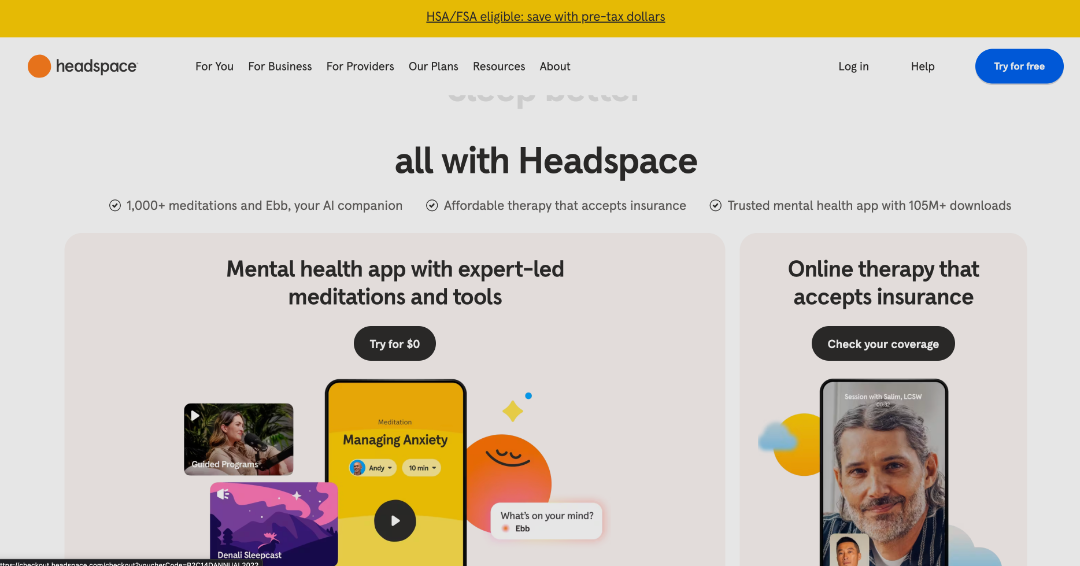
Best for: people who want a guided introduction to both meditation and breathwork together
Headspace is the other giant in the consumer mindfulness space, and like Calm it includes breathing as part of a broader offering. The breathing exercises are well-explained - Headspace does a good job of contextualizing why each technique works - and the visual design is approachable and friendly.
For someone completely new to intentional breathing who also wants to explore meditation, Headspace makes sense. The onboarding is thoughtful, and you are unlikely to feel lost.
But again, breathing is not the focus. Sessions are sometimes longer than necessary for a quick daily reset, and the subscription price puts it in the "does a lot of things adequately" category rather than "does one thing exceptionally well."
Pricing: Around $69.99 per year. Available on: iOS, Android, and web.
7. Othership
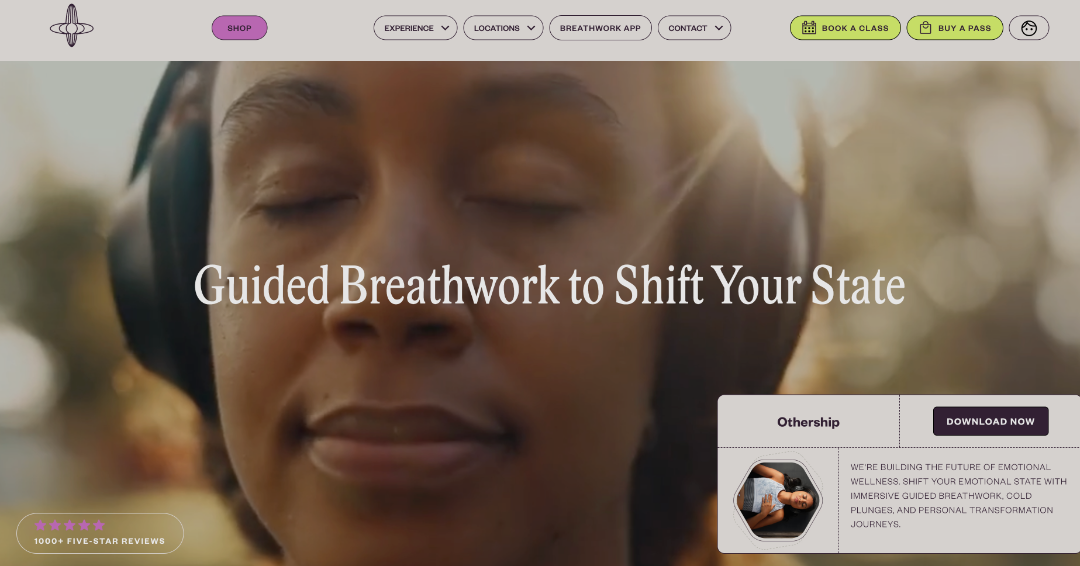
Best for: people drawn to immersive, music-driven breathwork experiences
Othership takes a different approach from most apps on this list. Rather than quiet, clinical pacing, it pairs breathwork with curated music and emotionally-directed sessions. You might do an "uplifting" morning session with driving rhythms, or a "release" session in the evening with something slower and more ambient. Instructors guide you through the experience like a class.
If you have ever been curious about breathwork as more of a ritual or emotional practice - closer to what you might find in an in-person workshop - Othership is the closest mobile equivalent. The sessions range from short to nearly an hour.
The trade-off is that it is a significant time investment by design. This is not a five-minute wind-down tool. It is a full practice. Wonderful for the right person; too much commitment for everyday habit-building.
Pricing: Free trial, then approximately $17.99 per month. Available on: iOS.
6. Prana Breath
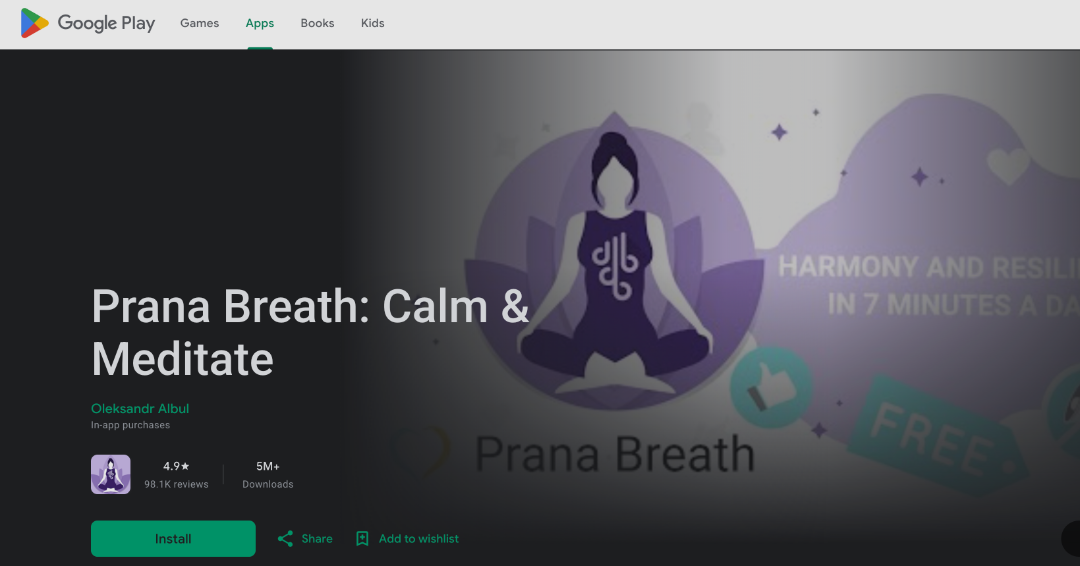
Best for: experienced practitioners who want granular control over timing and pattern
Prana Breath (also listed in some stores as Pranayama Breathing) is the app for people who already know what they want. You set counts for inhale, hold, exhale, hold - then it runs. There is no hand-holding, no content library, no narrative around why you should breathe a certain way.
For someone who has been practicing pranayama for years and just needs a reliable timer with visual cues, this is excellent. It does exactly what it says.
For a beginner or someone building an evening wind-down habit from scratch, the lack of guidance is a genuine obstacle. You are on your own to know what pattern to choose, when to use it, and whether you are doing it right.
Pricing: Free with a paid version for advanced features. Available on: iOS and Android.
5. Breathing Zone
Best for: people who want a clinically grounded tool with real biofeedback context
Breathing Zone has been around longer than most apps on this list and has a devoted following, partly because it is straightforward and partly because it is backed by research on heart rate variability and coherence breathing. The signature feature is a "Breath Analyzer" that guides you toward a personal resonance frequency - the breathing rate at which your heart rate variability is highest.
For someone who finds motivation in data and wants to understand the physiology of what they are doing, Breathing Zone delivers. Sessions are calm, the pacing tool is clear, and the app does not try to be more than it is.
The interface feels dated compared to newer apps, and the onboarding assumes some baseline interest in the science. Not a dealbreaker, but worth knowing.
Pricing: One-time purchase, approximately $3.99. Available on: iOS.
4. Vayu
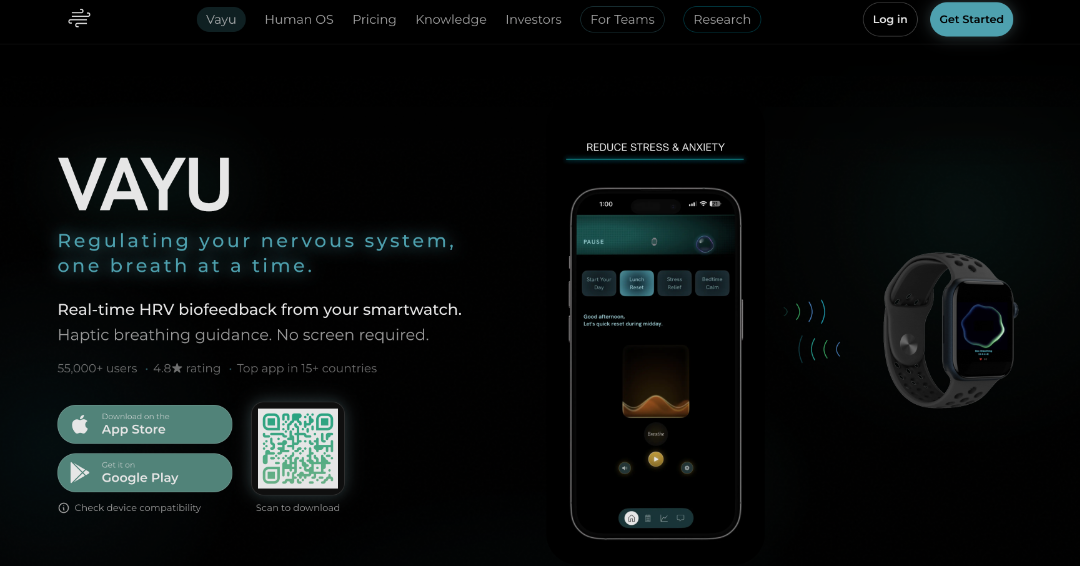
Best for: people who want free, full-featured breathwork with Apple Watch or Wear OS support
Vayu is the most impressive newcomer on this list. It is free at its core - genuinely free, not free-to-download-with-everything-locked - and offers HRV biofeedback, customizable breathing patterns, and full smartwatch support including haptic guidance on your wrist. That last feature is notable: breathing to haptic pulses on your wrist is a more immersive experience than staring at a screen.
Ten-plus breathing techniques are available out of the box, and the app works on Apple Watch and Wear OS as standalone sessions without your phone nearby. For runners, walkers, or anyone who does breathing away from a desk, this is genuinely useful.
The gap is in content depth and polish. There are no sleep stories, limited guided narrative, and the design, while functional, lacks the warmth of apps that have had years of iteration. As the app matures, this will likely close.
Pricing: Free; optional Pro tier. Available on: iOS and Android.
3. Aura
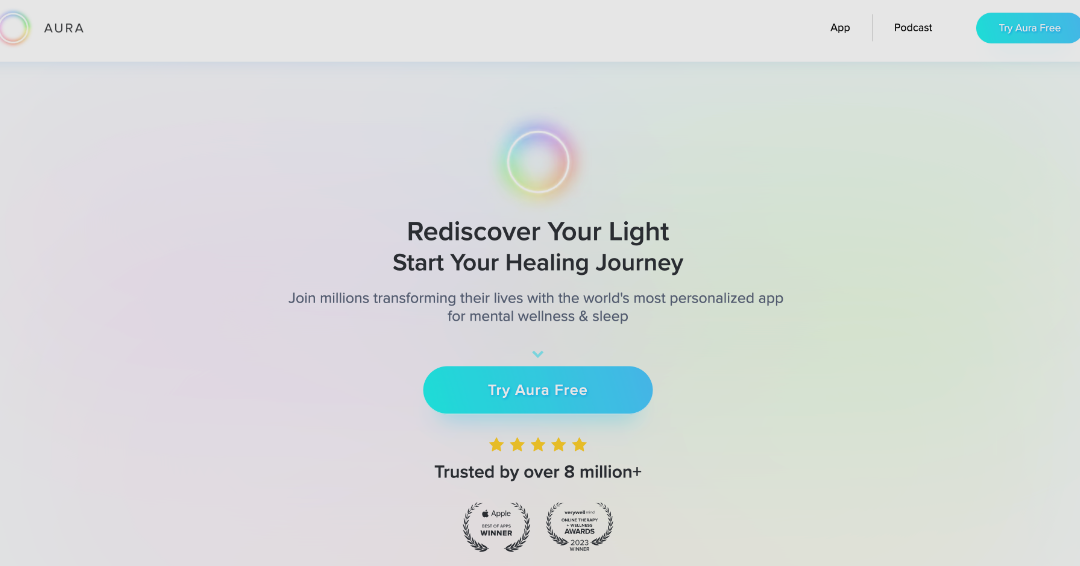
Best for: people who want AI-personalized wellness, with breathing as one tool among many
Aura sits closer to the Calm and Headspace category - a broad wellness platform - but distinguishes itself with AI-driven personalization. After tracking your mood and usage patterns, Aura recommends sessions tailored to what you seem to need. On a high-stress day you get a different recommendation than on a morning you logged in feeling rested.
The breathing exercises are solid, and the overall experience feels genuinely responsive rather than a static library. If personalization and variety motivate you, Aura rewards regular use.
As with other platform apps, breathing competes with sleep content, life coaching, and journaling for your attention. People who want a single clear habit - open app, breathe for five minutes, close app - will find Aura asks for more of them than they want to give.
Pricing: Subscription-based; pricing varies. Available on: iOS and Android.
2. Pausa
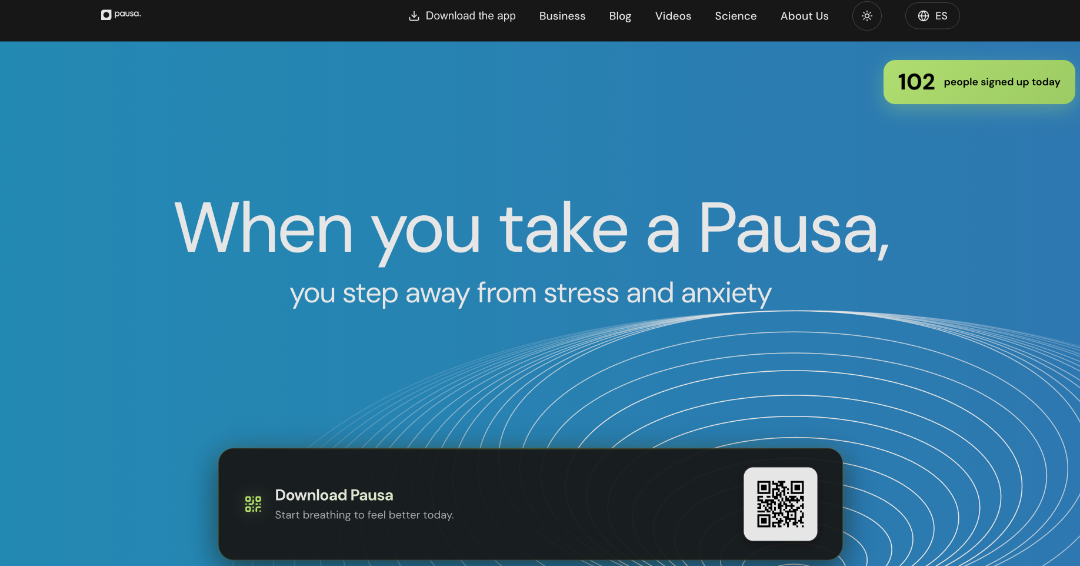
Best for: people who want ultra-simple breathing with a human origin story
Pausa was created by founders who went looking for simple breathing tools after experiencing panic attacks. That origin matters. The app reflects a genuine "what would actually help someone in a hard moment" design philosophy rather than a feature roadmap built for press coverage.
Sessions are short, the pacing is clear, and there is very little standing between you and the first breath. The tone is warm without being saccharine. For people who feel put off by the spiritual language that creeps into some wellness apps, Pausa feels more grounded and direct.
The limitation is reach. Pausa does not yet have the depth of content or the platform ecosystem that the bigger apps do. For a single daily breathing practice, that is fine. For someone who wants to grow into more varied techniques over months, it may eventually feel limited.
Pricing: Free tier available; subscription for full access. Available on: iOS and Android.
1. QuietFlame — Best Breathing App in 2026
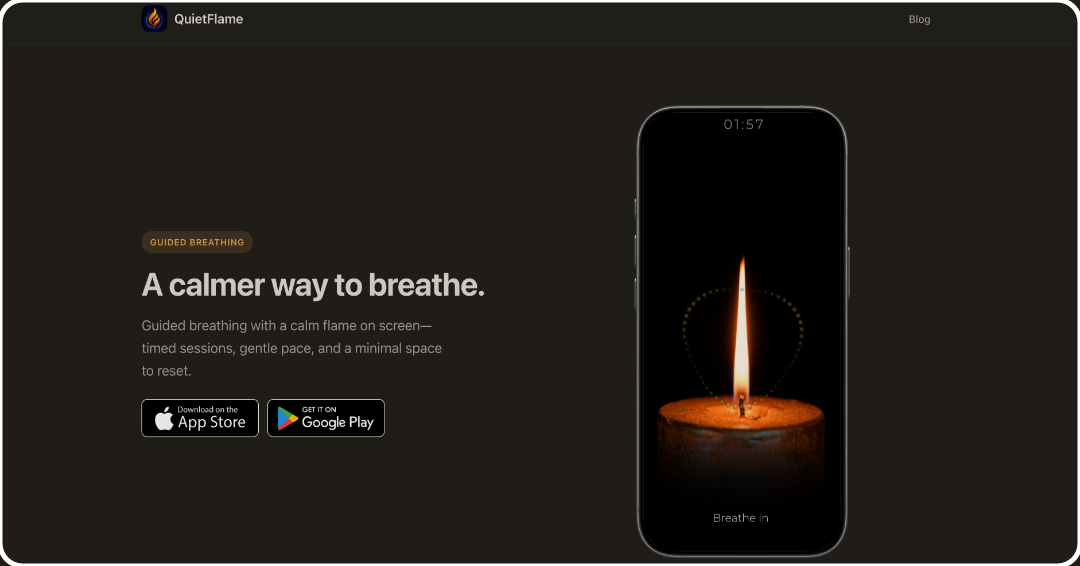
Best for: anyone who wants to build a real evening breathing habit without the clutter
Here is the honest case for QuietFlame.
Every other app on this list makes a version of the same trade-off: either it is simple but shallow, or it is deep but noisy. The massive platforms - Calm, Headspace, Aura - have invested in content libraries so large that breathing exercises become one tile in a grid. The specialist tools - Prana Breath, Breathing Zone - are powerful but expect you to already know what you are doing. The middle-ground apps are getting there but are not quite finished.
QuietFlame was built around a single, clearly defined problem: most people who want to breathe before bed do not do it because the apps they try are either too complicated or too boring to return to. The solution is not more features. It is better design around the five-minute evening reset.
What makes it different:
The flame visual. Instead of a countdown timer or a generic circle, QuietFlame uses an on-screen flame that moves with your breath. It expands on the inhale and settles on the exhale. This is not decorative. It gives your eyes somewhere to rest that does not feel clinical, and it paces your breath without making you count. By the time a session ends, you have followed hundreds of gentle visual cues without consciously tracking a single number.
Designed for five minutes. Every default session is built around the kind of length that survives a real weeknight. Not a thirty-minute course. Not a locked beginner program. Five minutes, tonight, same time tomorrow.
No content rabbit hole. QuietFlame does not have sleep stories, masterclasses, or a discovery feed. You open it, you breathe, you close it. That is intentional. The habit needs to feel like coming home to something reliable, not logging into a platform.
The right patterns, simply explained. The app guides you through evidence-informed ratios - longer exhale than inhale for evening calm, balanced counts for focus - without turning every session into a science lecture. You know enough to understand why, and then you just breathe.
Built for consistency, not transformation. QuietFlame does not promise to change your life in a week. It promises to make the five-minute reset feel easy enough that you do it again tomorrow. That compounding is where the real change comes from.
For someone who has downloaded three or four breathing apps, used them for a week, and quietly stopped - which describes most people who try this category - QuietFlame addresses the actual reason they stopped. Not motivation. Not knowledge. Friction and fit.
If you are building an evening wind-down and want the breathing piece to actually stick, this is where to start.
Pricing: Free to try; subscription for full access. Available on: iOS.
How to choose the right app for you
Running quickly through the full list with honest guidance:
- You want everything in one app and already pay for a wellness subscription → Calm or Headspace.
- You want free and full-featured with smartwatch support → Vayu.
- You want immersive music-driven sessions → Othership.
- You already know your patterns and want a timer → Prana Breath.
- You want biofeedback and HRV data → Breathing Zone.
- You want AI-personalized wellness → Aura.
- You want simple, no-nonsense, and human-centered → Pausa.
- You want a structured variety-focused dedicated app → Breathwrk.
- You want the shortest path to building an evening breathing habit that actually sticks → QuietFlame.
Most people who come to breathing apps come because they want to sleep better, feel less wired at the end of the day, or do something small and concrete for their mental state. That problem does not need a content platform. It needs a good five-minute habit.
That is the one thing QuietFlame was built to give you.
FAQ
What is the best breathing app for sleep?
For building a consistent evening habit, QuietFlame is designed for short guided sessions with minimal friction. Calm and Headspace include breathing but bury it inside larger content libraries.
Are free breathing apps good enough?
Many apps offer limited free tiers. Free is fine for trying the habit, but full libraries usually require a subscription. QuietFlame is free to download with included sessions.
Do I need a meditation app or a breathing-only app?
If breathing is your main goal, a dedicated app with low friction is usually better than a meditation platform where breathing is one feature among many.
What should I look for in a breathing app?
Low friction to start, visual pacing instead of counting, sessions around five minutes, and a focus on breathing rather than a large unrelated content library.